
Understanding Gasket Pressure
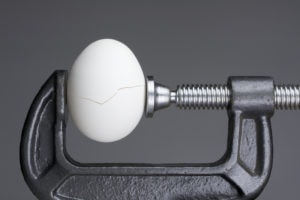
In short: a gasket seals because it is compressed between two flange faces hard enough to flow into their surface imperfections and hold against the internal pressure trying to push it out. The compressive (seating) stress must stay higher than the internal line pressure by a margin that depends on the gasket material, the flange class and how tight a seal the application demands. This guide explains how that balance is rated, measured and specified.
For high-volume or safety-critical work, our team can specify and supply gaskets to the correct class with full material traceability — talk to us about a production requirement.
What is gasket pressure?
Gasket pressure is the compressive load applied across the gasket face by the bolted flange joint. That load makes the gasket conform to both mating surfaces and creates the friction and contact stress that prevent leakage. Every gasket type — flat and flexible, spiral wound, or ring-type joint — needs a minimum compressive stress to seal, and a maximum it can withstand before it is crushed or extrudes out of the joint.
Two pressures matter, and they work against each other:
- Seating stress — the compression applied by the bolts to make the seal.
- Internal (line) pressure — the fluid or gas pressure inside the joint, which acts to separate the flanges and push the gasket outward.
To stay sealed, seating stress must exceed internal pressure by a factor that varies with gasket type and required tightness.
Gasket and flange pressure classes explained
The most common standard for flange geometry is ASME (formerly ANSI). The ASME pressure-class system has seven classes:
150 · 300 · 400 · 600 · 900 · 1500 · 2500
A higher class flange is built with more metal and so withstands more pressure: a Class 300 flange handles more than a Class 150. The rating is given in pounds, and the notations 150 lb, 150 lbs, 150# and Class 150 all mean the same thing. The class extends to the gasket — a Class 150 gasket is designed to seal in a Class 150 flange.
In Europe, PN (Pressure Nominal) ratings and BS EN 1092 / BS 4504 are also widely used; the PN number indicates the approximate pressure rating in bar. Note that PN numbers are not proportional to one another, whereas ASME class numbers are.
The actual pressure a gasket will hold ultimately depends on the material and the operating temperature — see our operating temperature guide, because the two are linked: as pressure rises, the temperature the joint can maintain falls, and vice versa.
Maximum pressure by gasket material
The table below gives indicative upper pressure limits for common gasket materials. Always read it alongside the temperature and chemical resistance the application requires — the lowest of the three limits governs material choice.
| Gasket material | Indicative maximum pressure |
|---|---|
| Natural rubber | 100 psi (≈7 bar) |
| Rubber — Nitrile, EPDM, Butyl, Neoprene, Viton, Silicone | 150 psi (≈10 bar) |
| Foam (Neoprene, Nitrile, EPDM, Silicone) | As base elastomer |
| PTFE | 800 psi (≈55 bar) |
| Non-asbestos fibre (NAF) | 750–1,500 psi (50–100 bar) |
| Compressed graphite | 2,100 psi (≈144 bar) |
| Non-asbestos fibre with stainless tanged insert | 2,500 psi (≈172 bar) |
| Compressed graphite with stainless tanged insert | 2,800+ psi (≈193 bar) |
| Expanded PTFE | 3,000 psi (≈206 bar) |
| Mica (high-temperature, rigid) | ≈2,030 psi (bar figure to confirm) |
Figures are indicative maxima for first-pass material selection only. Confirm against the specific grade datasheet and your operating temperature before specifying. For a confirmed recommendation, use our Material Selector or contact our technical team.
Minimum seating stress: why gaskets need compression
A minimum compressive stress is needed before a gasket seals at all. Tightening the bolts adds compression that blocks permeability through the gasket; as compressive load increases, leak rates fall. The contents matter too — gases need higher seating stress than liquids because their smaller molecules find any remaining leak path. Metal and semi-metallic gaskets need far more stress to seat than soft, flexible gaskets, where the seal depends on friction holding the gasket against blow-out.
Factors that change the pressure a gasket must handle
- Operating temperature — raises or lowers the effective pressure the joint sustains and drives material choice.
- Flange surface finish — too rough and a leak path forms under the gasket; damaged faces should be machined before refitting.
- Gasket thickness — as a rule the thinnest workable material seals best and resists blow-out; thickness is increased only to absorb flange distortion or misalignment. See why thinner is better.
- Stress relaxation — as a material ages, hardens or softens it loses the stress retention that holds the seal. Most rubber-based materials have a ~7-year shelf life; we can supply batch and cure dates for critical applications.
- Tensile strength — less important than it sounds: graphite is soft and brittle yet seals excellently under compression. Thinner sections of fibre and graphite resist pressure better.
Re-torquing and ROTT testing
The ROTT (Room Temperature Tightness) test determines the constant sealing pressure a gasket needs. Heating a joint causes gasket relaxation and a drop in bolt load — losses can reach 50% of the initial gasket stress. For that reason, depending on gasket type, it is good practice to re-torque after the first heat cycle. If a flexible gasket is over-compressed it will extrude out of the flange gap; a persistent problem points to the need for a more rigid material with better stress relaxation and temperature tolerance.
Low-pressure and vacuum sealing
Sealing a vacuum is a different challenge: softer materials generally seal better. Natural rubbers, butyls and soft polymers such as polyurethane deform and seal well under the low loads of a vacuum environment. Our technical department can advise on the right material for a specific low-pressure duty.
Standards and codes
The flange standard describes the joint geometry. The most common in oil, gas and process industries are ASME B16.5 and B16.34: B16.5 covers pressure–temperature ratings, materials, dimensions, tolerances, marking and testing (metric and US units); B16.34 covers pressure/temperature ratings. ASME was formerly ANSI and the two can now be treated as one; older drawings may still list ANSI, but newly rated joints are ASME. In Europe, PN-rated flanges and BS EN 1092 / BS 4504 are common.
Frequently asked questions
What is gasket seating stress? The minimum compressive pressure needed to make a gasket conform to the flange faces and start sealing. Below it, the joint leaks regardless of internal pressure.
Does a gasket need more pressure to seal gas than liquid? Yes. Gases have smaller molecules and escape through any residual leak path, so sealing gas requires higher seating stress than sealing a liquid.
Why do you re-torque a flange after heating? Heat relaxes the gasket and reduces bolt load — sometimes by up to half. Re-torquing after the first heat cycle restores the seating stress and maintains the seal.
Which gasket material handles the highest pressure? Among common materials, expanded PTFE (~3,000 psi) and tanged-insert compressed graphite (~2,800+ psi) carry the highest indicative limits, but temperature and chemical resistance must be assessed together.
Need gaskets specified and supplied to the correct class, with traceability, for a production run? Tell us your application → or contact our technical team.
Gasket Pressure: Codes and Standards
Classes and standards describes the geometry of the flange. The most common flange standard used in most countries in oil, gas and mining is ASME B16.5 and B16.34. B16.5 covers pressure-temperature ratings including materials, dimensions, tolerances, marking and testing, both in metric and US customary units. B16.34 covers the pressure/temperature ratings.
ASME was previously ANSI, and these can now be considered one and the same. Older flange specifications may still list ANSI. However, all newly rated flange joints will be ASME (the American National Standard). In Europe PN rated flanges and BS4504 are also commonly used flange ratings. PN (Pressure Numbers) is the rating designator followed by a designation number indicating the approximate pressure rating in bars. PN ratings do not provide a proportional relationship between different PN numbers, whereas class numbers do. For a dimensions table of ANSI standard flanges please see here.